
How to Find Creators for Your Indie Game
A practical creator-outreach guide for indie teams that need fit, not just follower counts.
On this page
The best creator for your game is usually not the biggest one. It is the one whose audience already understands why your game matters.
That sounds obvious, but a lot of indie outreach still turns into a size chase. Teams build lists around follower counts, then wonder why replies are weak and coverage does not convert into meaningful store intent.
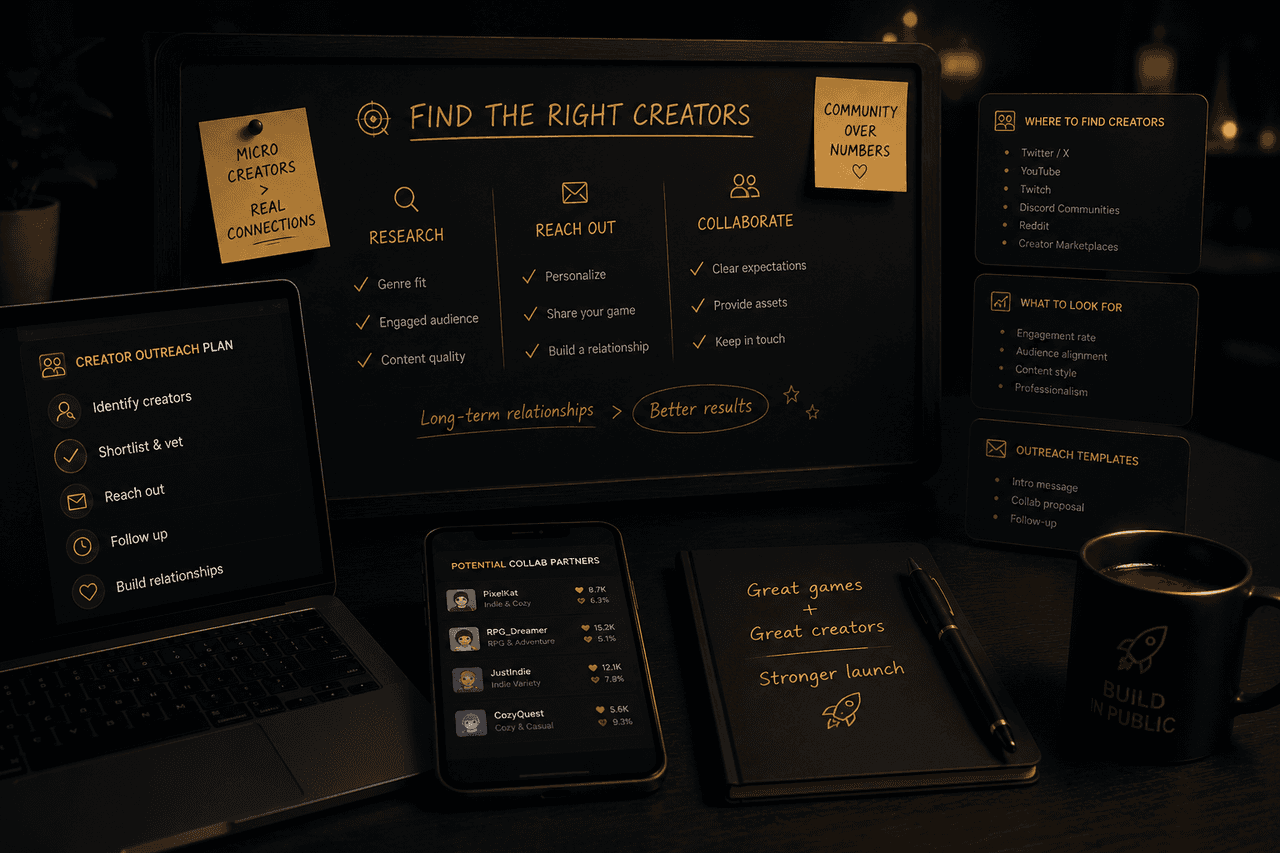
This guide is about finding creators by fit: genre, format, audience expectation, and the kinds of games they already know how to explain.
Why creator fit matters more than size
A creator with a smaller but better-matched audience can outperform a huge channel that treats your game as filler.
Fit matters because:
- the audience already likes the genre or loop
- the creator knows what to focus on
- the coverage feels more credible
- the click-through traffic is better qualified
If your game needs explanation, niche creators are often where the best early traction starts.
Small creators vs big creators
Small and mid-size creators
Usually better for:
- demos
- niche genres
- deeper system-heavy games
- early relationship building
- feedback-rich coverage
Larger creators
Usually better when:
- the hook is obvious
- the game is visually strong immediately
- the build is stable enough for a bigger spotlight
- you already have momentum from other channels
Do not turn this into a false either/or. Many teams need a layered list: smaller creators first, then larger creators if the response signal is good.
Match by genre and content type
Start by asking what type of creator your game actually needs:
- tactics or deckbuilding creator
- cozy recommendation creator
- horror reaction creator
- deep systems streamer
- demo roundup channel
- "games like X" recommendation creator
Then ask what content format fits the game:
- one-run highlight
- long-form stream
- first-impressions video
- demo showcase
- recommendation roundup
If the creator format and the game format disagree, the outreach is weaker even if the audience looks relevant on paper.
Find creators from similar games
One of the best ways to build a list is to start from similar games your audience already understands.
Look at:
- creators who covered games with similar genre tags
- creators who reviewed or streamed your closest tonal comparisons
- channels that already post demo-focused or upcoming-release content
This is also where a clean GameHubber listing helps. If players and creators can already see where the game belongs through tags, pitch, and release context, the game is easier to compare honestly.
Demo-friendly creators
Some creators are much more useful when you have a demo than when you only have a trailer.
Good demo-friendly creators usually:
- cover festivals or playable builds
- like first-impressions content
- are comfortable showing in-progress but promising games
- care about mechanics, not just polished spectacle
If you have a demo, prioritize creators who actually like demos. Do not waste time forcing a build onto channels that only care about finished launches.
GameHubber CTA
Submit your game to GameHubber
Get your game listed in Release Radar, Daily Board, Discover, and future award surfaces.
Outreach basics
Your outreach note should answer five things fast:
- what the game is
- why their audience fits
- what build or asset is available
- why now is a good time
- where to click next
You do not need to write a mini essay. You do need to sound like you know why you contacted that person.
What assets to prepare
Before outreach, have these ready:
- store page link
- short pitch
- trailer
- screenshots
- demo or review build if available
- press kit
- release timing
- contact details
If you want one more useful surface, keep your GameHubber listing current too. It gives creators a quick way to verify the game, its timing, and the discovery context without forcing them to piece it together from scattered posts.
What not to do
- do not spam the same message to everyone
- do not pretend your game fits every creator
- do not send a build with no context
- do not chase only giant channels
- do not encourage scraped-email spam
Good outreach is targeted and ethical. It is slower than blasting a list, but it creates much better trust.
Where GameHubber fits now and later
Today, GameHubber can help creators and players understand the game through:
- a public listing
- short pitch and release timing
- discovery context in upcoming and browse surfaces
- another path to the store page
Longer term, future Creator Radar-style features can make creator fit even more visible, but you should treat that as future positioning, not a promise that exists today.
A practical creator-finding workflow
Step 1: define the fit
- genre
- audience tone
- preferred video format
- whether the game is demo-friendly
Step 2: build the first 20 names
- ten smaller creators
- five mid-size creators
- five stretch creators
Step 3: prepare the assets
- one sentence pitch
- one paragraph pitch
- store link
- build instructions
- trailer
Step 4: send in waves
- start with the best-fit smaller creators
- learn from the replies
- tighten the message
- then expand outward
Step 5: update the listing layer
Make sure every creator click lands somewhere coherent. That means the store page and GameHubber listing should already reflect the game you are pitching.
Mistakes to avoid
- building the list around vanity metrics
- contacting creators before the game page is credible
- ignoring format fit
- using one generic comparison for every outreach note
- treating outreach like a numbers game only
Final takeaway
The right creators help the right players understand why your game is worth a closer look. That is more valuable than raw reach with weak fit.
Match by genre, audience, and content type. Use similar games as your starting map. Keep the outreach targeted and ethical. Then make sure the click lands on a store page and listing stack strong enough to carry the interest forward.
Continue exploring
Related release radar and discovery pages
Developer Guides
Practical launch, wishlist, demo, creator, and visibility guides for game developers.
Developer platform
Learn how GameHubber helps studios get discovered before and during launch.
Studio
Open the studio workspace for listings, analytics, and launch-readiness tools.
Submit your game
Start a new game listing with launch, media, and store details.
Studio billing
Manage Studio Pro, campaign packages, and billing details.
Release Radar
Track upcoming games by platform, genre, mood, and release timing.
Discover Games
Swipe through trailers and explore upcoming games by platform, mood, and demo availability.
Continue exploring
More guides like this
Best Places to List Your Indie Game Before Launch
A practical pre-launch visibility map for indie developers who need more than a Steam page and a vague marketing plan.
How to Get More Steam Wishlists Before Launch
A practical wishlist plan for indie teams that want more qualified store intent before launch.
How to Promote Your Game Demo Before Launch
A practical plan for getting your demo in front of the right players before launch without spamming every channel you can find.
Author
GameHubber
Editorial voice for upcoming games, demos, hidden gems, and discovery guides tied directly to the GameHubber product surface.
Share this guide